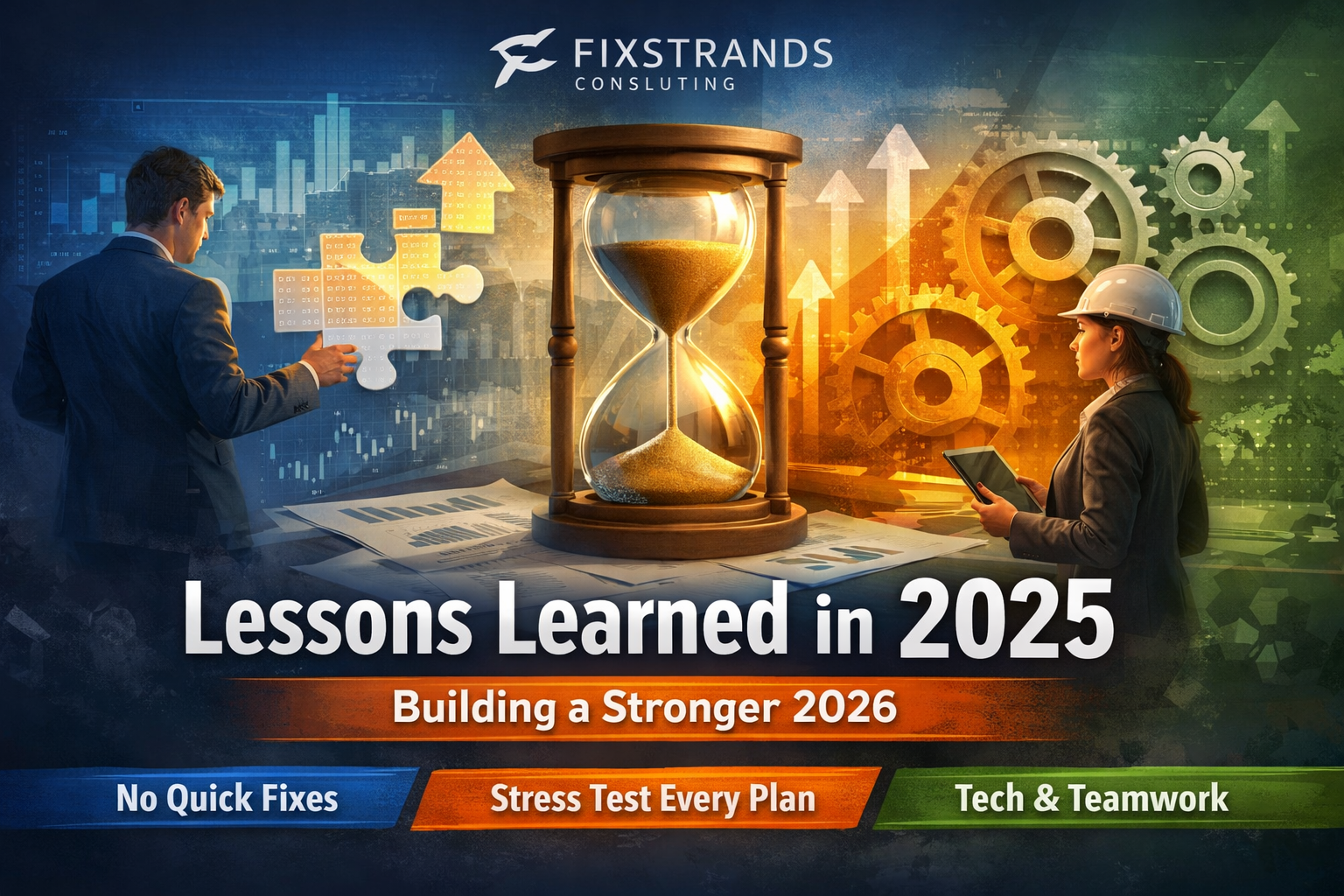
As we move deeper into 2026, the dust has finally settled on last year’s projects. At Fixstrands Consulting, we believe strongly in radical transparency. Our best work doesn’t come only from what went right, but from the hard lessons learned when things didn’t go according to plan. Looking back at our financial advisory and business analytics engagements, several clear themes emerged that are now shaping how we help our clients win this year.
One of the strongest lessons was that there are no real shortcuts in finance. We helped a mid-sized retail client restructure its debt and reduce annual interest costs by 15%, but the real work happened long before the savings appeared. It took nearly three months of detailed data cleanup to get there. Many businesses look for a quick fix to improve cash flow, yet sustainable growth is built on unglamorous foundations. You cannot scale a business on messy data. With AI-driven analytics becoming standard in 2026, clean and structured financial records are no longer optional; they are the entry ticket. The lesson is simple: fix the strands of your data first, and the results will follow.
Another hard truth we encountered was the danger of planning without pressure-testing assumptions. In one project, a client’s aggressive expansion strategy stalled after a relatively small shift in interest rates. It became clear that a best-case scenario is not a strategy; it is a wish. The past year reinforced that volatility is the norm, not the exception. The most successful clients were not those with the boldest projections, but those with plans resilient enough to absorb shocks. This is why scenario stress testing is now built into every financial strategy and internal review we undertake. If a key revenue stream were to drop tomorrow, would your business survive, and for how long? Not knowing the answer is one of the most significant risks a company can carry.
We also learned that technology, while powerful, is never a silver bullet. In one engagement, we helped a logistics firm implement automated reporting, reducing month-end closing time by 5 days. The success, however, had little to do with the software itself and everything to do with readiness. Many failed implementations we saw last year were rooted in weak change management, not poor technology. Tools only work when people and processes are aligned. Digital transformation is far less about systems and far more about culture, discipline, and ownership.
As we look ahead to the rest of 2026, one theme stands out clearly: clarity over complexity. The businesses that will win are not those chasing the most sophisticated tools or models, but those with a precise and honest understanding of their financial position. We are carrying forward both the wins and the bruises from last year to help our partners become more than just stable. Our goal is to help you build a business that is resilient, informed, and unshakeable.
Lessons from last year’s consulting wins and failures
 By
/ January 14, 2026
By
/ January 14, 2026